 edward
I first tried making Gordon Ramsay Lasagne Al Forno on a rainy Sunday when I had three hours to spare and a bottle of Chianti begging to be opened. This is a proper Italian-style lasagne — slow-simmered beef and pork ragu, silky béchamel, and a golden Parmigiano-Reggiano crust that shatters under your fork.
The total time runs about 150 minutes from start to finish, and I’d call it intermediate difficulty — the ragu needs patience, and the béchamel demands steady whisking. It serves 4 generously, making it ideal for a Sunday dinner or a special gathering where you want to impress without hovering over the stove all day.
What is Gordon Ramsay Lasagne Al Forno?
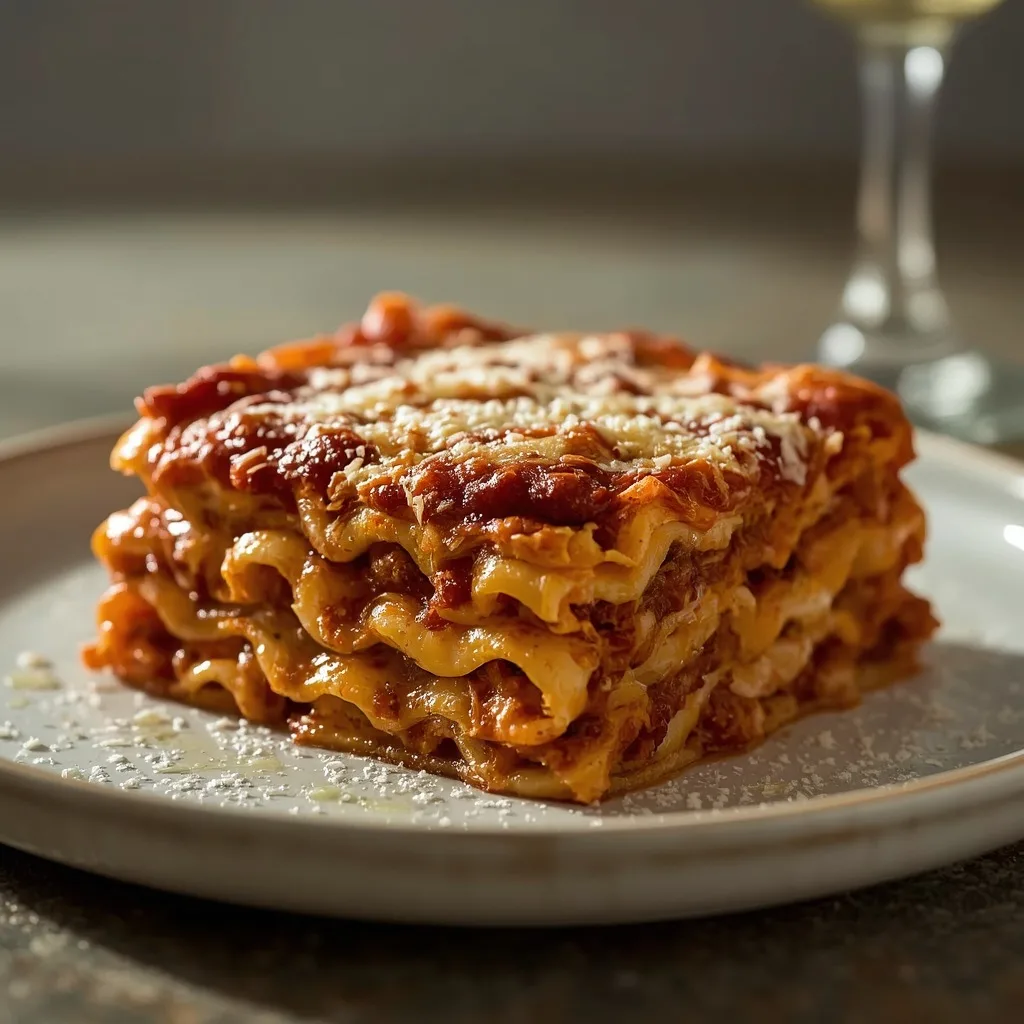
It’s a layered pasta bake built on three components: a wine-spiked meat ragù simmered for over an hour with San Marzano tomatoes, a nutmeg-scented béchamel made from whole milk, and dried lasagna sheets that soak up all that richness. The final result is deeply savoury with a creamy contrast in every bite, and the top turns bronzed and bubbling if you let it bake uncovered long enough. Serve it straight from the dish while it’s still warm — that’s when the layers hold their shape and the cheese pulls in long ribbons.
My Honest Review of Gordon Ramsay Lasagne Al Forno
After making this twice — once exactly as written and once with a few tweaks — I can say it delivers restaurant-quality results without any fussy technique. The ragu is the star, and the béchamel is the quiet hero that ties everything together.
Taste
The red wine reduction gives the meat sauce a depth that you don’t get from quick weeknight ragùs, and the oregano and thyme stay subtle rather than overpowering. One surprise: it’s not overly salty at 1 teaspoon of kosher salt for the whole ragu, so taste before layering and add more if needed.
Texture
Properly rested, the lasagne slices into clean squares with distinct layers — tender pasta, rich meat, and creamy béchamel that’s thick enough to hold its place. The mozzarella on top creates a slightly chewy crust that contrasts nicely with the softer interior, though I found the béchamel could curdle slightly if you skip the resting time.
Difficulty
I’d call this intermediate, not because any single step is hard, but because the timing overlaps — the ragu simmers while you make the béchamel and boil the noodles. The step that demands the most attention is the béchamel; if you stop whisking even briefly, lumps form and the sauce can scorch on the bottom.
Would I Make It Again?
Yes, absolutely — but I’d make the ragu a day ahead, as the recipe suggests, because the flavours genuinely deepen overnight. I’d also double the béchamel next time, since my 8-inch dish was slightly dry in the middle layers compared to the top and bottom.
Overall Rating
4.5/5 — it’s a labour of love, but the layered texture and slow-simmered flavour justify every minute of cooking time.
Ingredients Needed for Gordon Ramsay Lasagne Al Forno
Everything on this list is straightforward and available at any decent supermarket — nothing exotic or hard to source.
For the Ragu
- 1/2 cup olive oil — the cooking fat for the soffritto; a good quality extra-virgin oil adds flavour, but regular works fine too.
- 1 large onion, finely chopped (about 1 cup) — forms the base of the soffritto alongside the carrot and celery; chop it small so it melts into the sauce.
- 1 large carrot, peeled and finely diced (about 1/2 cup) — adds a subtle sweetness that balances the acidity of the tomatoes.
- 1 large celery stalk, finely diced (about 1/2 cup) — brings an earthy depth that you can’t quite name but would notice if it were missing.
- 1 lb ground beef (preferably 85% lean) — the main protein; 85% lean keeps enough fat for flavour without making the ragu greasy.
- 1/2 lb ground pork (optional, or use all beef) — the pork adds richness and a softer texture; if you skip it, just use 1.5 lb of beef total.
- 1/2 cup dry red wine (such as Chianti) — deglazes the pan and adds complexity; use something you’d actually drink, not cooking wine.
- 2 cups crushed tomatoes (preferably San Marzano) — San Marzano are sweeter and less acidic; if you can’t find them, a good quality crushed tomato from a reputable brand works.
- 1/4 cup tomato paste — concentrates the tomato flavour and thickens the sauce; stir it in well so it doesn’t clump.
- 1 tsp dried oregano — classic Italian herb that stands up to the long simmer without fading away.
- 1/2 tsp dried thyme — adds an earthy, slightly floral note that pairs beautifully with the beef.
- 1 bay leaf — infuses the sauce while it simmers; remember to fish it out before assembling the lasagne.
- 1 tsp kosher salt, plus more to taste — season the ragu in stages, not all at once; the salt level will concentrate as the sauce reduces.
- 1/2 tsp freshly ground black pepper, plus more to taste — freshly ground tastes noticeably better than pre-ground; add a little more at the end if you like heat.
For the Béchamel
- 3 tbsp unsalted butter — the fat for the roux; unsalted lets you control the seasoning.
- 1/4 cup all-purpose flour — thickens the milk into a smooth sauce; whisk constantly to avoid lumps.
- 2 cups whole milk, warmed — warming the milk first helps the sauce stay lump-free; cold milk into a hot roux is a recipe for disaster.
- 1/8 tsp freshly grated nutmeg — just a whisper, but it lifts the whole sauce; grate it fresh, pre-ground tastes flat.
For the Layers and Topping
- 8 oz dried lasagna noodles (about 9-10 sheets, no-boil or regular) — no-boil sheets save time but need more moisture; regular sheets need a brief pre-cook to al dente minus one minute.
- 1 cup grated Parmigiano-Reggiano (about 4 oz) — the real Parmigiano-Reggiano is worth the extra cost; pre-grated stuff won’t melt as smoothly.
- 1 cup shredded mozzarella (about 4 oz) for topping (optional) — it’s optional, but the bubbling golden crust it creates is part of the magic; low-moisture mozzarella works best.
Kitchen Equipment You’ll Need
Nothing fancy here — just the standard kit you’d expect for a layered pasta bake.
- Large heavy-bottomed pot or Dutch oven — the backbone of the ragu; it needs to hold heat evenly so the meat browns properly and the sauce simmers gently without scorching.
- Medium heavy-bottomed saucepan — for the béchamel; the thicker bottom prevents hot spots from burning the roux.
- 8-inch by 8-inch or 9-inch by 13-inch baking dish — either works, though the 8-inch gives taller layers; just make sure your pasta sheets fit comfortably.
- Wooden spoon or spatula — the right tool for breaking up the ground meat as it browns; metal can scrape the seasoning off your pan.
- Whisk — absolutely essential for the béchamel; a fork or spoon will leave you with lumps you can’t easily fix.
- Aluminum foil — for tenting the lasagne during the first bake; it stops the cheese from burning before the centre is hot.
- Large pot for boiling noodles — if you’re using regular dried sheets, you need enough water for them to move freely as they cook.
How to Make Gordon Ramsay Lasagne Al Forno
This is a long build, but every step is logical — start the ragu first, then use that simmering time to knock out the béchamel and prep the noodles.
- Build the soffritto — Heat the olive oil in a large heavy-bottomed pot over medium heat, then add the onion, carrot, and celery. Cook for 8-10 minutes, stirring occasionally, until the vegetables soften and turn translucent without browning — this aromatic base doesn’t need colour, just sweetness.
- Brown the meat — Crank the heat to medium-high and add the ground beef and pork. Break it up with a wooden spoon and cook for 8-10 minutes until no pink remains; scrape the bottom to incorporate those browned bits, which carry serious flavour.
- Deglaze with wine — Pour in the red wine and bring to a simmer, scraping up any stuck-on bits. Let it reduce for 2-3 minutes until mostly evaporated — the alcohol cooks off, leaving behind the wine’s fruity, tannic depth.
- Simmer the ragu — Stir in crushed tomatoes, tomato paste, oregano, thyme, bay leaf, salt, and pepper. Bring to a gentle simmer, then drop the heat to low, cover partially, and cook for at least 1 hour — uncover in the final 15 minutes if it looks too thin.
- Preheat and prep the béchamel — While the ragu works, preheat your oven to 375°F / 190°C. In a medium saucepan, melt the butter over medium heat until it foams but doesn’t brown, then whisk in the flour for 1 minute to make a roux.
- Finish the béchamel — Gradually pour in the warm milk, whisking constantly, and cook for 5-7 minutes until thick enough to coat the back of a spoon. Pull it off the heat, season with nutmeg and a pinch of salt, and press plastic wrap directly on the surface to stop a skin forming.
- Cook the noodles — If using regular lasagna sheets, boil them in salted water until not quite al dente — about 1 minute less than the package says. Drain and lay them on a lightly oiled baking sheet with parchment between layers so they don’t stick together.
- Start layering — Spread a thin layer of meat sauce (about 1/2 cup) on the bottom of your baking dish. This adds moisture and stops the pasta from fusing to the dish.
- Build the layers — Lay down a sheet of noodles, then 1/3 of the remaining meat sauce, drizzle with 1/3 of the béchamel, and scatter a generous tablespoon of Parmigiano. Repeat twice more, then finish with noodles, the last of the béchamel, and a generous shower of Parmigiano and mozzarella.
- Bake covered, then uncovered — Tent the dish with foil so it doesn’t touch the cheese, then bake for 30 minutes. Remove the foil and bake 15-20 minutes more until the top is golden and the edges bubble.
- Check doneness — Slide a knife into the centre — it should sink in with no resistance, and the internal temperature should hit at least 165°F / 74°C.
- Rest before slicing — Sit the lasagne for 10-15 minutes minimum. If you cut it straight away, it will flow across the plate like soup.
- Slice and serve — Cut neat squares or rectangles with a sharp knife, garnish with fresh basil if you like, and serve with a green salad and crusty bread.
- Make it a day ahead (optional) — Refrigerate the ragu overnight, then reassemble the next day; the flavours develop further, and the finished dish tastes even better.
Common Mistakes to Avoid
These are the slip-ups I made on my first go — and the fixes that made the second attempt far better.
- Skipping the soffritto step — I’ve seen people dump everything in the pot at once, but the onions, carrot, and celery need those 8-10 minutes to sweeten. Rushing this leaves a raw, vegetal taste in the final sauce.
- Whisking the béchamel intermittently — Set it down to grab something, and you’ll come back to lumps. Commit to continuous whisking for the full 5-7 minutes; that’s the only way to get it silky.
- Overcooking the noodles — If you boil regular sheets to fully al dente, they turn mushy after baking. Stop them a full minute early — they’ll finish cooking in the oven.
- Cutting before it rests — The single biggest mistake. Ten minutes feels like an eternity when the kitchen smells incredible, but giving in and slicing early ruins the clean layers you worked for.
- Skipping the resting period for the ragu — The sauce thickens significantly as it simmers. If you’re impatient and pull it at 45 minutes, you’ll have a soupy lasagne that won’t hold its shape.
- Adding too much salt early on — The ragu reduces and concentrates, so that teaspoon of kosher salt becomes more impactful after an hour of simmering. Season early, but taste at the end and adjust rather than overdoing it upfront.
What Goes Well With Gordon Ramsay Lasagne Al Forno
This is a rich dish, so think fresh and bright when you build the rest of the meal.
- A crisp green salad — The acidity of a simple lemon vinaigrette cuts through the creamy richness of the béchamel and beef.
- Crusty sourdough or ciabatta — Essential for mopping up the leftover sauce and cheese that pool around the edge of your plate.
- A bold Chianti or Sangiovese — A glass of the same wine you used in the ragu ties the meal together beautifully.
- Grilled or roasted vegetables — charred broccoli or asparagus with balsamic glaze adds a welcome bitter note against all that richness.
- A light panna cotta or lemon sorbet for dessert — Something uncomplicated and not too sweet after such a substantial main.
Expert Tips for the Best Gordon Ramsay Lasagne Al Forno
Little details that separate a good lasagne from a memorable one.
- Brown the meat in batches — If your pot is crowded, the meat steams instead of browns. Work in two batches if needed — the caramelised crust adds depth.
- Let the béchamel breathe — After seasoning, let it sit off the heat for 5 minutes before layering. It thickens slightly as it cools, giving you a creamier finish.
- Use whole milk, not skim — The higher fat content makes the sauce richer and less likely to split in the oven.
- Press the plastic wrap onto the béchamel’s surface — A skin forming on top will leave lumps in your sauce; the wrap prevents it completely.
- Rest the lasagne uncovered — Try and rest it loosely covered with foil — it stays warm without trapping condensation that makes the top soggy.
- Taste the ragu before assembling — After an hour of simmering, it may need an extra pinch of salt or a grind of pepper. Adjust now, not after baking.
Easy Variations to Try
Once you’ve mastered the classic version, these twists keep things interesting.
- Swap the ground pork for Italian sausage — Squeeze the sausage meat out of its casings and brown it alongside the beef for extra fennel and spice notes.
- Add a layer of wilted spinach — Sauté fresh spinach with garlic and layer it between the ragu and béchamel for a pop of green and an extra vegetable serving.
- Use no-boil noodles for convenience — Skip the pre-cook entirely; just make sure your ragu and béchamel are slightly looser so the sheets rehydrate properly.
- Go vegetarian with mushrooms — Swap the meat for finely chopped cremini or portobello mushrooms, cooked down until dark and jammy alongside the soffritto.
- Swap Parmigiano for Pecorino Romano — The sheep’s milk cheese adds a saltier, sharper edge that holds up beautifully in the layers.
- Add a pinch of chilli flakes — A small heat kick lifts the whole dish without making it spicy; sprinkle it into the ragu with the other herbs.
How to Store Leftover Lasagne Al Forno
This dish only gets better the next day, so hold onto those leftovers.
- Refrigerator — Cool the lasagne completely, cover the dish tightly with foil or transfer to an airtight container, and keep for up to 3 days.
- Single portions — Cut individual squares, wrap each in plastic wrap, and stack them in a container for grab-and-go lunches.
- Prepped ahead — Assemble the lasagne unbaked, cover it tightly, and refrigerate for up to 24 hours before baking — add 10-15 minutes to the covered bake time.
- Freezer storage — Wrap the assembled but unbaked lasagne tightly in plastic wrap and foil, and freeze for up to 3 months.
- Label everything — Stick a note with the date and contents on any container you freeze, or you’ll inevitably find a mystery lasagne in the back of your freezer in three months.
Can You Freeze It?
Yes, absolutely — this is one of the best make-ahead dishes for the freezer. Freeze it assembled but unbaked, wrapped tightly in a layer of plastic wrap and a layer of foil, and it will keep for up to 3 months. The béchamel holds up well in the freezer because it’s a milk-based sauce rather than a cream-based one, which would separate on thawing.
Best Way to Reheat
For individual portions, the microwave works perfectly — just heat on medium in 1-minute intervals, checking between each burst, until the centre is hot. For a whole lasagne, thaw it in the fridge overnight if it was frozen, then reheat covered in a 325°F / 163°C oven for 10-15 minutes, leaving the foil on to stop the edges drying out.
Nutrition Facts (Per Serving)
Based on 1 serving out of 4 total servings.
- Calories — 812
- Protein — 37g
- Fat — 48g
- Saturated Fat — around 18g
- Carbohydrates — about 55g
- Fiber — about 6g
- Sugar — roughly 12g
- Sodium — 890mg
- Cholesterol — about 110mg
FAQs
Can I use all beef instead of the beef and pork mix?
Yes — just increase the ground beef to 1.5 lb total. The pork adds richness and a slightly softer texture, but lean beef alone makes a perfectly good ragu.
How long does the ragu need to simmer?
At least 1 hour, and the recipe suggests uncovering for the last 15 minutes if it’s too thin. You can go longer if you have time — 90 minutes to 2 hours only deepens the flavour.
Do I need to boil no-boil lasagna noodles before assembling?
No, skip that step entirely. Just make sure your ragu and béchamel have a bit more liquid than you think necessary, because the sheets will absorb moisture as they bake.
Why does my béchamel have lumps?
You likely stopped whisking or added the milk too quickly. Start over if it’s beyond saving — but for next time, add the warm milk in a slow, steady stream while whisking constantly.
Can I make this lasagne ahead of time?
Yes — the recipe even recommends refrigerating the ragu overnight and assembling the next day. You can also assemble the whole lasagne unbaked and refrigerate for up to 24 hours before baking, just add extra covered cooking time.
Is the mozzarella topping essential?
No, it’s listed as optional, but I’d keep it — the golden, bubbling mozzarella crust is one of the best parts. Low-moisture mozzarella will give you the best melt without making the top soggy.
PrintGordon Ramsay Lasagne Al Forno
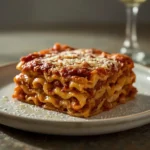
This classic Italian lasagne features a rich slow-simmered ragu, a velvety béchamel sauce, and layers of tender pasta, finished with a golden crust of Parmigiano-Reggiano. The combination of hearty beef, creamy sauce, and al dente noodles creates a deeply satisfying dish that is perfect for Sunday dinners or special gatherings. Follow these detailed steps for perfectly layered, restaurant-quality results every time.
- Prep Time: 45
- Cook Time: 105
- Total Time: 150
- Yield: 4 1x
- Category: Main Course
- Method: Baking
- Cuisine: Italian
Ingredients
- 1/2 cup olive oil
- 1 large onion, finely chopped (about 1 cup)
- 1 large carrot, peeled and finely diced (about 1/2 cup)
- 1 large celery stalk, finely diced (about 1/2 cup)
- 1 lb ground beef (preferably 85% lean)
- 1/2 lb ground pork (optional, or use all beef)
- 1/2 cup dry red wine (such as Chianti)
- 2 cups crushed tomatoes (preferably San Marzano)
- 1/4 cup tomato paste
- 1 tsp dried oregano
- 1/2 tsp dried thyme
- 1 bay leaf
- 1 tsp kosher salt, plus more to taste
- 1/2 tsp freshly ground black pepper, plus more to taste
- 3 tbsp unsalted butter
- 1/4 cup all-purpose flour
- 2 cups whole milk, warmed
- 1/8 tsp freshly grated nutmeg
- 8 oz dried lasagna noodles (about 9–10 sheets, no-boil or regular)
- 1 cup grated Parmigiano-Reggiano (about 4 oz)
- 1 cup shredded mozzarella (about 4 oz) for topping (optional)
Instructions
- Heat the olive oil in a large heavy-bottomed pot or Dutch oven over medium heat. Add the onion, carrot, and celery and cook, stirring occasionally, for 8-10 minutes until the vegetables are soft and translucent, but not browned. This base, known as soffritto, provides the aromatic foundation for the sauce.
- Increase the heat to medium-high and add the ground beef and pork. Break up the meat with a wooden spoon and cook, stirring frequently, for 8-10 minutes until all the meat is browned and no pink remains. Make sure to scrape the bottom of the pot to incorporate any browned bits, which add flavor.
- Pour in the red wine and bring to a simmer, scraping up any browned bits from the bottom of the pot. Let the wine reduce for about 2-3 minutes until it has mostly evaporated and the alcohol has cooked off.
- Stir in the crushed tomatoes, tomato paste, oregano, thyme, bay leaf, kosher salt, and black pepper. Bring to a gentle simmer, then reduce the heat to low. Cover partially and let the sauce simmer for at least 1 hour, stirring occasionally, until it has thickened and the flavors meld together. Uncover for the last 15 minutes if the sauce seems too thin.
- Preheat your oven to 375°F / 190°C. While the ragu simmers, prepare the béchamel sauce. In a medium heavy-bottomed saucepan, melt the butter over medium heat. When the butter foams but does not brown, add the flour and whisk constantly for 1 minute to form a roux.
- Gradually pour in the warm milk while whisking continuously to prevent lumps. Cook, whisking, for 5-7 minutes until the sauce has thickened and coats the back of a spoon. Remove from heat and season with nutmeg, a pinch of salt, and a pinch of white pepper. Set aside with a piece of plastic wrap pressed directly on the surface to prevent a skin from forming.
- If using regular lasagna noodles, cook them in a large pot of salted boiling water until not quite al dente, about 1 minute less than the package instructions (usually 6-7 minutes). Drain and lay them on a lightly oiled baking sheet, separating layers with parchment paper, to prevent sticking. If using no-boil noodles, skip this step.
- To assemble the lasagne, spread a thin layer of the meat sauce (about 1/2 cup) on the bottom of a 8-inch by 8-inch baking dish or a 9-inch by 13-inch dish, whichever fits your pasta sheets. This prevents sticking and adds moisture to the bottom layer.
- Place a layer of noodles over the sauce, trimming to fit if necessary. Spread about 1/3 of the remaining meat sauce evenly over the noodles. Drizzle with 1/3 of the béchamel and sprinkle with a generous tablespoon of grated Parmigiano. Repeat the layering two more times, ending with a final layer of noodles, the remaining béchamel, and a generous sprinkling of Parmigiano and mozzarella on top.
- Cover the dish with aluminum foil that is tented slightly to avoid touching the cheese. Bake the lasagne for 30 minutes, then remove the foil and continue baking for an additional 15-20 minutes, or until the top is golden brown and bubbling around the edges.
- Check that the lasagne is cooked through by inserting a knife into the center; it should slide in easily with no resistance. The internal temperature of the lasagne should reach at least 165°F / 74°C, though the cheese will likely be hotter.
- Remove the lasagne from the oven and allow it to rest for at least 10-15 minutes before serving. This resting period is essential for the layers to set, making slicing and serving much easier. If you cut it immediately, it will flow onto the plate.
- To serve, use a sharp knife to cut into neat squares or rectangles. Garnish with a few fresh basil leaves if desired, and accompany with a simple green salad and crusty bread.
- For the best taste, refrigerate the ragu a day ahead and reassemble the lasagne the next day; the flavors develop further overnight, making the finished dish even more delicious.
Notes
Storage: Cool the cooked lasagne completely, then cover and refrigerate for up to 3 days. Freezing: For longer storage, freeze the assembled but unbaked lasagne (omit the final baking) in a freezer-safe dish wrapped tightly with plastic wrap and foil for up to 3 months. To bake from frozen, thaw in the refrigerator overnight, then bake covered at 375°F / 190°C for 40-45 minutes, uncover, and bake 15 minutes more until hot and bubbly. Reheating: Reheat single portions in a microwave on medium power in 1-minute intervals until hot, or in a 325°F / 163°C oven for 10-15 minutes. Cover with foil to prevent excess drying.
Nutrition
- Calories: 812
- Sugar: 12g
- Sodium: 890mg
- Saturated Fat: 18g
- Carbohydrates: 55g
- Fiber: 6g
- Protein: 37g
- Cholesterol: 110mg
Keywords: Gordon Ramsay lasagne, lasagne al forno, Italian pasta bake, beef lasagne, béchamel sauce, homemade lasagne, Sunday dinner, comfort food, oven baked pasta, layered pasta dish