 edward
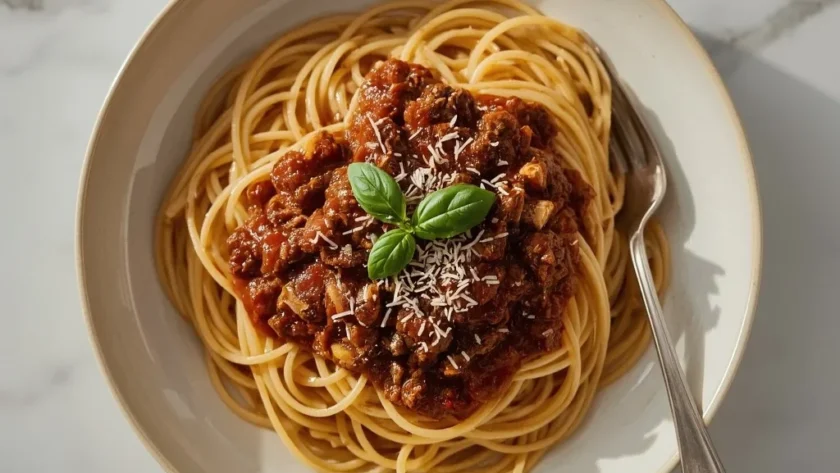
Gordon Ramsay Spaghetti Bolognese is a rich, slow-simmered meat sauce built on pancetta, beef, and pork, finished with a touch of butter and fresh basil. It’s the kind of Sunday-night cooking that fills the kitchen with the smell of red wine and garlic long before you sit down.
From start to finish, this recipe takes 90 minutes total — 15 minutes of prep and 75 minutes of cooking. It’s an intermediate-level dish that serves four, and it’s perfect for a cozy dinner with friends, especially when you have time to let the sauce do its thing. The one step that needs your full attention is the simmering: it’s long, but it’s also where all the depth comes from.
What is Gordon Ramsay Spaghetti Bolognese?
In plain terms, this is a classic Italian ragù made with finely diced pancetta, ground beef, ground pork, and a mirepoix of onion, carrot, and celery. The meat is browned hard, deglazed with red wine, then simmered low and slow with tomato passata, stock, and a splash of whole milk for that signature velvety richness.
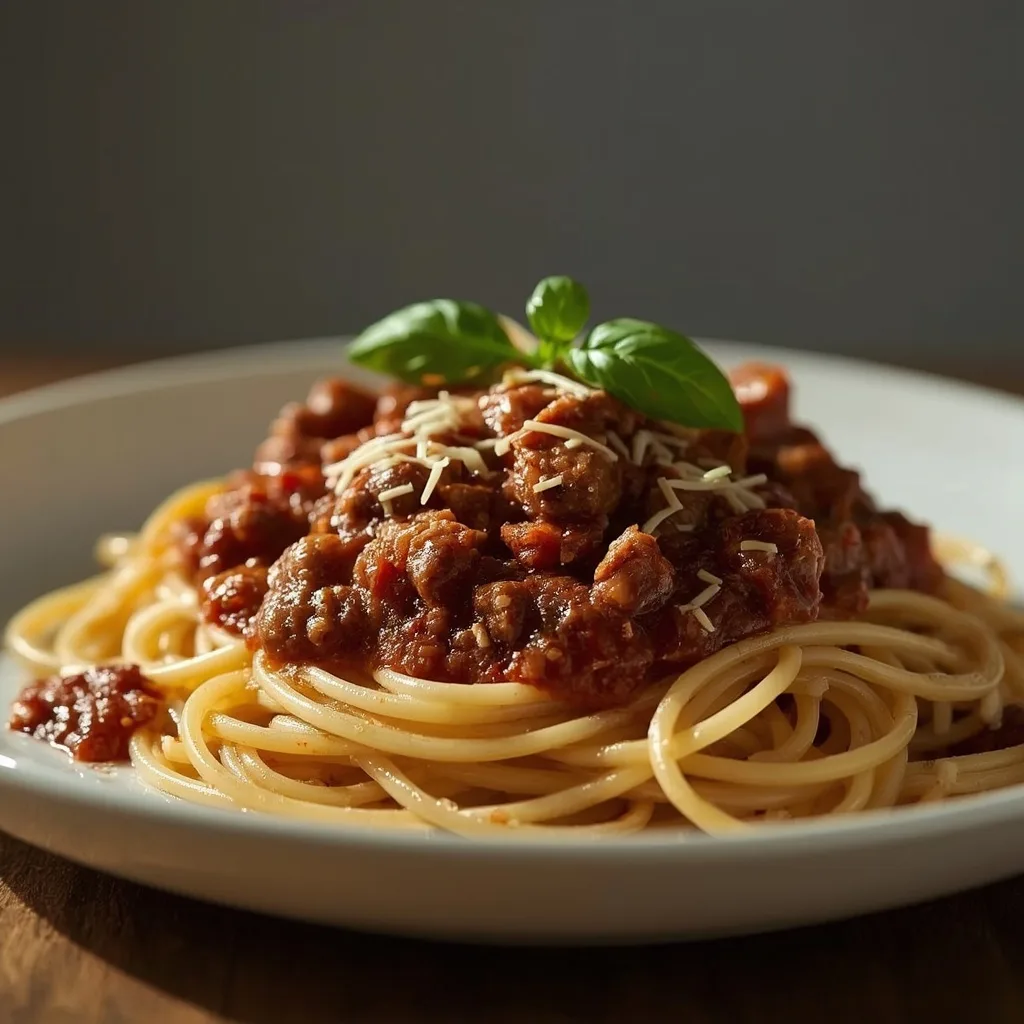
The final sauce is thick enough to cling to each strand of al dente spaghetti — glossy, savory, and deeply comforting, with just enough acidity from the tomatoes to balance the fat. It’s a bowl of food that feels both rustic and refined, and it’s equally at home on a weeknight or at a dinner party.
My Honest Review of Gordon Ramsay Spaghetti Bolognese
I’ve made a lot of bolognese over the years, and this version stands out for how balanced it is. The pancetta adds a smoky saltiness, the milk rounds out the acidity, and the wine gives it that unmistakable depth. It’s a genuinely good recipe that delivers on its promise of a restaurant-quality sauce at home.
Taste
The flavor is deeply savory with a subtle sweetness from the caramelized vegetables and milk. The wine doesn’t dominate — it just adds a low hum of complexity in the background. If anything, I found the sauce slightly on the acidic side straight from the pot, so a pinch of sugar before serving can help if your tomatoes are particularly tart.
Texture
The sauce is thick, rich, and clings to the spaghetti beautifully — exactly what you want. The ground meats stay tender and slightly coarse, while the pancetta adds little crispy bits of contrast. The butter stirred in at the end gives everything a glossy, velvety finish that feels almost luxurious.
Difficulty
This is an intermediate recipe. The steps are simple, but the pace matters: browning the meat properly without stirring too often, letting the wine reduce, and keeping the sauce at a gentle simmer for 45 to 50 minutes. The hardest part is patience, not technique.
Would I Make It Again?
Yes, absolutely. I’d make this again in a heartbeat, especially for a dinner party or a lazy Sunday. The only thing I’d tweak is adding a bit more salt at the end — I found the sauce needed an extra pinch to really make the flavors pop.
Overall Rating
4.5/5 — a genuinely excellent bolognese that’s rich, comforting, and well-balanced, with only a minor seasoning adjustment needed at the finish.
Ingredients Needed for Gordon Ramsay Spaghetti Bolognese
Here’s everything you need to make the sauce and cook the pasta. The ingredients are straightforward, but a few choices make all the difference.
The Aromatics
- 2 tbsp olive oil — The cooking fat for the pancetta and vegetables. A good extra-virgin olive oil adds flavor, but a neutral one works too.
- 2 oz pancetta, finely diced — This gives the sauce a smoky, salty backbone. If you can’t find pancetta, guanciale or even a thick-cut bacon makes a fine swap.
- 1 medium onion, finely diced (about 1 cup) — The sweet base of the mirepoix. Dice it small and even so it melts into the sauce.
- 1 medium carrot, finely diced (about 1/2 cup) — Adds a gentle sweetness and body. No need to peel it if the skins are clean.
- 1 celery rib, finely diced (about 1/2 cup) — Brings a subtle earthy bitterness that balances the richness. Remove any tough strings.
- 2 cloves garlic, minced — Added at the last minute so it stays fragrant, not bitter. Fresh garlic is essential here.
The Meat
- 8 oz ground beef (80% lean) — The 80% lean is important: it has enough fat to stay juicy without making the sauce greasy. Leaner meat dries out.
- 8 oz ground pork — Adds sweetness and a softer, more tender texture. You could use all beef, but the sauce won’t be as complex.
The Sauce
- 1/2 cup dry red wine, such as Chianti — This is the flavor backbone. Use something you’d happily drink; the alcohol cooks off, but the taste stays.
- 1 cup tomato passata (or crushed tomatoes) — Passata gives a smoother, more refined sauce. If using crushed tomatoes, expect a chunkier texture.
- 1/4 cup tomato paste — This deepens the tomato flavor and helps thicken the sauce. Don’t skip it.
- 1 cup low-sodium beef stock — Adds body and savory depth without pushing the salt too high. Homemade stock works great.
- 1/2 cup whole milk — The classic Italian trick for a velvety sauce. It rounds out the acidity and gives a silky mouthfeel.
- 1 tsp kosher salt, plus more to taste — Go easy at first; you can always add more at the end. Kosher salt dissolves more evenly than table salt.
- 1/2 tsp freshly ground black pepper, plus more to taste — Freshly ground makes a real difference. Pre-ground pepper tastes flat by comparison.
- 1/2 tsp dried oregano — A quiet herb that adds warmth without shouting over the other flavors.
- 1 bay leaf — Adds a subtle aromatic layer. Remember to fish it out before serving.
The Pasta and Finish
- 12 oz spaghetti — Use a good-quality brand; the texture of al dente pasta matters just as much as the sauce. A wider noodle like tagliatelle also works.
- 2 tbsp unsalted butter — Stirred in at the end for a glossy, rich finish. It gives the sauce that restaurant-quality shine.
- 1/4 cup freshly grated Parmesan cheese, plus more for serving — Grate it yourself — pre-grated cheese contains starch that prevents melting. It goes in at the end, not during the simmer.
- 2 tbsp fresh basil leaves, torn — Bright, fragrant, and fresh. Tear them just before adding so they don’t bruise.
Kitchen Equipment You’ll Need
Before you start, gather the basics — most of these you already own. Here’s the full list:
- A large Dutch oven or heavy-bottomed pot — This is the workhorse of the recipe. It holds heat evenly and gives the meat room to brown properly.
- A wooden spoon — The best tool for breaking up ground meat and scraping up fond. It won’t scratch your pot.
- A slotted spoon — For removing the cooked pancetta from the pot while leaving the rendered fat behind.
- A large pot for boiling pasta — Big enough that the spaghetti can move freely. Too small and the pasta sticks together.
- A colander — For draining the spaghetti. Use it once; you’ll also want to reserve a cup of pasta water.
- Measuring cups and spoons — Precision matters with the salt and wine. A splash here and there adds up.
- A fine grater — For the Parmesan. Pre-grated cheese won’t melt the same way into the sauce.
How to Make Gordon Ramsay Spaghetti Bolognese
The method is straightforward, but each step layers flavor onto the next. Follow the order exactly, and you’ll be rewarded with a sauce that tastes like it simmered all day.
- Brown the pancetta — Heat the olive oil in the Dutch oven over medium heat, add the pancetta, and cook for 4 to 5 minutes until crisp and golden. Transfer to a plate with a slotted spoon, leaving the rendered fat in the pot.
- Soften the vegetables — Add the onion, carrot, and celery to the same pot. Cook over medium heat for 6 to 8 minutes, stirring frequently, until softened and lightly caramelized. The moisture from the vegetables lifts the browned bits from the pot.
- Add the garlic — Stir in the minced garlic and cook for just 1 minute until fragrant. If it starts to brown too quickly, drop the heat to medium-low — burnt garlic tastes bitter and will ruin the sauce.
- Brown the meat — Increase the heat to medium-high, add both ground meats, and break them into small pieces with a wooden spoon. Cook for 8 to 10 minutes, stirring occasionally — not constantly — until the meat is browned and no longer pink. Proper browning equals deeper flavor.
- Deglaze with wine — Return the pancetta to the pot and pour in the red wine. Scrape up any browned bits from the bottom with your wooden spoon. Let it simmer for 3 to 4 minutes until reduced by half and the alcohol smell is gone.
- Build the sauce — Stir in the passata, tomato paste, beef stock, milk, salt, pepper, oregano, and bay leaf. Bring to a gentle simmer, then reduce the heat to low so it barely bubbles. Cover with the lid slightly ajar and let it cook for 45 to 50 minutes, stirring every 10 minutes.
- Check and season — After 45 minutes, the sauce should be thick and rich, not watery. Remove the bay leaf, taste, and adjust salt and pepper. The milk should be fully incorporated — velvety, not dairy-forward.
- Cook the pasta — While the sauce simmers, bring a large pot of salted water to a rolling boil. Cook the spaghetti according to package directions until al dente, typically 9 to 11 minutes. Reserve 1 cup of pasta water before draining.
- Marry the sauce and pasta — Drain the spaghetti and return it to the pot. Add the bolognese and the butter, then toss over medium-low heat for 1 to 2 minutes until every strand is coated. Add a splash of pasta water if the sauce seems too thick.
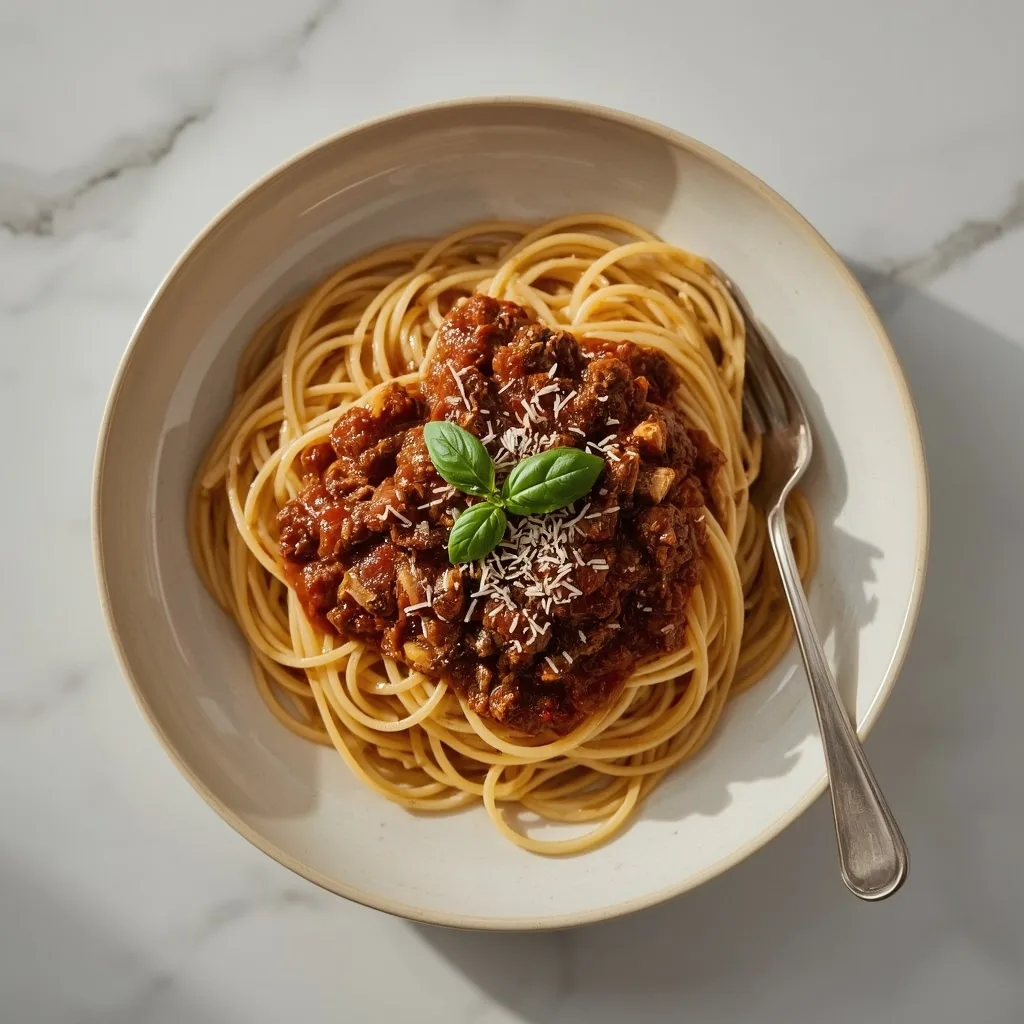
- Finish with cheese and basil — Remove the pot from the heat, stir in the Parmesan and torn basil, and toss once more to distribute. The sauce should cling to the spaghetti with a glossy richness.
- Serve immediately — Divide into warmed shallow bowls and top with extra Parmesan and a drizzle of olive oil if you like. Don’t let it sit — this dish is best the moment it’s tossed.
Common Mistakes to Avoid
After testing this recipe a few times, I’ve learned where things go wrong. Avoid these, and you’ll land it on the first try.
- Skipping the browning — If you rush the meat, you lose the depth. Give it the full 8 to 10 minutes and let it brown properly in the pan.
- Over-stirring the meat — Stirring too often keeps the meat from developing color. Let it sit for stretches of a minute or two between stirs.
- Adding garlic too early — Burned garlic turns bitter quickly. Cook it for just 1 minute and pull the pot off the heat if it’s going too fast.
- Simmering too aggressively — The sauce should barely bubble. If it’s boiling hard, the milk will split and the sauce will thin out.
- Forgetting to reserve pasta water — That starchy liquid is your insurance policy for a sauce that’s too thick. Don’t drain it down the sink.
- Skipping the butter at the end — It might seem extra, but that tablespoon of butter is what gives the sauce its glossy, velvety finish.
What Goes Well With Gordon Ramsay Spaghetti Bolognese
This bolognese is hearty enough to be a meal on its own, but the right sides and drinks round it out beautifully.
- A crisp green salad — The freshness cuts through the richness. A simple mix of arugula, lemon, and shaved Parmesan works nicely.
- Garlic bread or crusty sourdough — You’ll want something to mop up any sauce that pools in the bowl. Warm, crusty bread is non-negotiable.
- A glass of Chianti — Staying with the same wine you cooked with makes sense. Its acidity stands up to the tomatoes and meat.
- Roasted vegetables — Try charred broccolini or roasted zucchini alongside. The smokiness complements the deep flavors of the sauce.
- A simple burrata salad — Creamy cheese with juicy tomatoes and basil echoes the dish’s Italian roots without competing with it.
Expert Tips for the Best Gordon Ramsay Spaghetti Bolognese
Small choices compound into big flavor differences. These are the tricks I’ve picked up from making this dish repeatedly.
- Dice the vegetables finely — Even, small pieces melt into the sauce instead of leaving chunks. A food processor can help, but a sharp knife is more precise.
- Use 80% lean ground beef — Fat carries flavor. Too-lean meat will leave the sauce dry and uninteresting.
- Let the wine reduce properly — It should halve in volume before you add the tomatoes. That takes 3 to 4 minutes; don’t rush it.
- Stir every 10 minutes during the simmer — The sauce sits low and thick, so it can catch on the bottom of the pot. A quick stir prevents scorching.
- Taste and adjust at the end — The sauce changes a lot over 45 minutes. Salt, pepper, and a pinch of sugar can fix a bitter tomato finish.
- Reserve more pasta water than you think you need — A full cup gives you room to adjust. You can always leave some in the pot.
Easy Variations to Try
Once you’ve mastered the base, the possibilities are endless. Here are a few simple twists that all work with this exact technique.
- Swap in ground turkey — Replace the pork with turkey for a lighter sauce. The flavor won’t be as deep, so add an extra pinch of salt.
- Try a different pasta shape — Skip the spaghetti and use tagliatelle, pappardelle, or even rigatoni. The chunkier the pasta, the more sauce it holds.
- Add a pinch of chili flakes — A small heat spike at the garlic stage gives the sauce a gentle kick without turning it spicy.
- Finish with fresh parsley instead of basil — It’s a small swap, but parsley brings a slightly grassier, cleaner note that some prefer.
- Make it gluten-free — Use a good gluten-free spaghetti and check the label on your stock. The sauce itself is naturally gluten-free.
- Double the recipe — The sauce freezes beautifully, so make a double batch. Just extend the simmer time to about an hour.
How to Store Leftover Spaghetti Bolognese
This dish stores well, and the sauce actually improves after a day in the fridge as the flavors meld.
- Refrigerator storage — Keep the leftover bolognese and pasta in an airtight container for up to 3 days. They can be stored together or separately.
- Freezer portioning — Freeze the sauce on its own in a freezer-safe container or zip-top bag for up to 3 months. Label it with a date first.
- Cool before storing — Let the sauce cool completely before refrigerating or freezing. Rapid cooling in a shallow dish works best.
- Keep pasta separate — The cooked spaghetti doesn’t freeze well — it turns mushy. Store the pasta and sauce separately if you plan to freeze.
Can You Freeze It?
Yes, you absolutely can freeze the bolognese sauce, and it holds up remarkably well for up to 3 months. The sauce keeps its flavor and texture through freezing and thawing, making it the perfect make-ahead dinner.
The pasta, however, is a different story. Cooked spaghetti turns soft and mealy when frozen and reheated, so only freeze the sauce. When you’re ready to use it, thaw it overnight in the fridge, then reheat gently before tossing with freshly cooked pasta.
Best Way to Reheat
For the best results, reheat the bolognese sauce in a saucepan over medium-low heat with a splash of water or beef stock to loosen it. Simmer gently until hot throughout — for frozen sauce that’s already thawed, 5 to 7 minutes should do it.
For the pasta, reheat it separately in a skillet with a little olive oil or butter until hot. If you’re short on time, the microwave works too — heat it in high in 30-second intervals, stirring between, until warmed through.
Nutrition Facts (Per Serving)
Based on 1 serving out of 4 total.
- Calories — 580 per serving.
- Protein — 35g
- Fat — 22g
- Saturated Fat — 9g
- Carbohydrates — 67g
- Fiber — 5g
- Sugar — 10g
- Sodium — around 680mg
- Cholesterol — roughly 90mg
FAQs
Can I use a different type of ground meat?
Yes, but the flavor will change. Ground turkey or chicken works, though the sauce will be leaner and less rich. You may need to add a touch more olive oil to compensate.
How long does it take to make this recipe?
The total time is 90 minutes — 15 minutes of prep and 75 minutes of cooking. Most of that is hands-off simmering time.
Why does this recipe include milk?
The milk rounds out the acidity of the tomatoes and gives the sauce a velvety, silky texture. It’s a classic technique in Italian ragù that softens the sharp edges of the wine and tomatoes.
What is the best pasta to use?
Spaghetti is the classic choice, but any long, sturdy pasta works — tagliatelle, pappardelle, or fettuccine all hold the sauce well. The key is cooking it al dente so it doesn’t turn mushy.
Do I need to use wine?
It’s not strictly necessary, but the wine adds real depth. If you skip it, replace it with a splash of beef stock mixed with a pinch of sugar to compensate for the lost complexity.
Is this recipe beginner-friendly?
It’s best suited to someone at an intermediate level. The steps are simple, but the timing and technique — especially the browning and long simmer — require a little patience and attention.
PrintGordon Ramsay Spaghetti Bolognese
This rich and hearty spaghetti bolognese features a deeply savory meat sauce built with pancetta, beef, and pork, simmered with red wine and tomatoes until thick and luscious. The sauce clings to each strand of al dente spaghetti, offering a perfect balance of acidity, sweetness, and umami. Finished with a touch of butter and fresh basil, this restaurant-quality dish brings bold flavor to your home table.
- Prep Time: 15
- Cook Time: 75
- Total Time: 90
- Yield: 4 1x
- Category: Main Course
- Method: Stovetop
- Cuisine: Italian
Ingredients
- 2 tbsp olive oil
- 2 oz pancetta, finely diced
- 1 medium onion, finely diced (about 1 cup)
- 1 medium carrot, finely diced (about 1/2 cup)
- 1 celery rib, finely diced (about 1/2 cup)
- 2 cloves garlic, minced
- 8 oz ground beef (80% lean)
- 8 oz ground pork
- 1/2 cup dry red wine, such as Chianti
- 1 cup tomato passata (or crushed tomatoes)
- 1/4 cup tomato paste
- 1 cup low-sodium beef stock
- 1/2 cup whole milk
- 1 tsp kosher salt, plus more to taste
- 1/2 tsp freshly ground black pepper, plus more to taste
- 1/2 tsp dried oregano
- 1 bay leaf
- 12 oz spaghetti
- 2 tbsp unsalted butter
- 1/4 cup freshly grated Parmesan cheese, plus more for serving
- 2 tbsp fresh basil leaves, torn
Instructions
- Heat the olive oil in a large Dutch oven or heavy-bottomed pot over medium heat. Add the pancetta and cook, stirring occasionally, for 4 to 5 minutes until the fat renders and the pancetta is crisp and golden. Use a slotted spoon to transfer the pancetta to a plate, leaving the rendered fat in the pot.
- Add the onion, carrot, and celery to the same pot. Cook over medium heat for 6 to 8 minutes, stirring frequently, until the vegetables are softened and lightly caramelized. The moisture from the vegetables will help lift any browned bits from the bottom of the pot, adding flavor.
- Add the minced garlic and cook for 1 minute, stirring constantly, until fragrant but not browned. If the garlic browns too quickly, reduce the heat to medium-low to avoid a bitter taste.
- Increase the heat to medium-high and add the ground beef and ground pork. Break the meat into small pieces with a wooden spoon and cook for 8 to 10 minutes, stirring occasionally, until the meat is browned and no longer pink. Do not stir too frequently; this allows proper browning for deeper flavor.
- Return the cooked pancetta to the pot with the meat. Pour in the red wine and use the wooden spoon to scrape up any browned bits from the bottom of the pot. Let the wine simmer for 3 to 4 minutes until it has reduced by half and the alcohol smell has cooked off.
- Stir in the tomato passata, tomato paste, beef stock, milk, kosher salt, black pepper, oregano, and bay leaf. Bring the sauce to a gentle simmer, then reduce the heat to low so the sauce barely bubbles. Cover with the lid slightly ajar and let it simmer for 45 to 50 minutes, stirring every 10 minutes to prevent sticking.
- After 45 minutes, check the sauce consistency and seasoning. The sauce should be thick and rich, not watery. Remove the bay leaf. Taste and add more salt and pepper if needed. The milk should have fully incorporated, lending a velvety texture without tasting dairy.
- While the sauce simmers, bring a large pot of salted water to a rolling boil. Add the spaghetti and cook according to package directions until al dente, typically 9 to 11 minutes. Reserve 1 cup of pasta water before draining.
- Drain the spaghetti well and return it to the pot. Add the finished bolognese sauce and the unsalted butter to the pasta. Toss everything together over medium-low heat for 1 to 2 minutes, allowing the sauce to coat each strand and the butter to melt into the sauce. Add a splash of reserved pasta water if the sauce seems too thick.
- Remove the pot from the heat and stir in the grated Parmesan cheese and torn basil leaves. Toss one final time to distribute the cheese and basil evenly.
- Serve immediately in warmed shallow bowls, topping each portion with extra Parmesan and a drizzle of olive oil if desired. The sauce should cling to the spaghetti with a glossy richness, not pool in the bowl.
Notes
Storage: Refrigerate leftover bolognese and pasta in an airtight container for up to 3 days. Keep the sauce and pasta together or separate, but they store well either way. Freezing: The bolognese sauce freezes beautifully for up to 3 months. Let it cool completely, then transfer to a freezer-safe container or zip-top bag. Thaw overnight in the fridge. Reheat: For best results, reheat the bolognese in a saucepan over medium-low heat, adding a splash of water or beef stock to loosen it. For pasta, reheat in a skillet with a little olive oil or butter until hot, or microwave on high in 30-second intervals, stirring between, until heated through. If reheating frozen sauce, simmer gently for 5 to 7 minutes after thawing until hot throughout. The pasta alone does not freeze well; it becomes mushy when thawed. Use 80% lean ground beef for the best flavor; leaner meat may result in a drier sauce. Add a pinch of sugar or a bit more tomato paste if your tomatoes are acidic.
Nutrition
- Calories: 580
- Sugar: 10g
- Sodium: 680mg
- Saturated Fat: 9g
- Carbohydrates: 67g
- Fiber: 5g
- Protein: 35g
- Cholesterol: 90mg
Keywords: Gordon Ramsay spaghetti bolognese, bolognese sauce recipe, spaghetti bolognese, Italian meat sauce, beef and pork ragù, classic bolognese, homemade pasta sauce, easy weeknight dinner, slow simmered sauce, family favorite